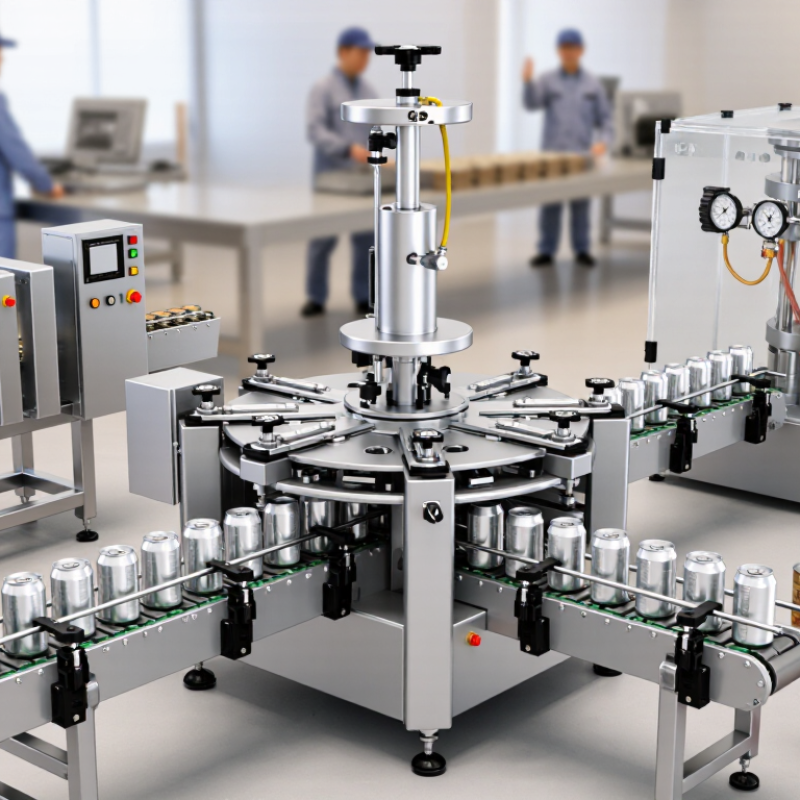
Selecting the right automatic can seamer starts with the container, not the advertised speed. Can diameter, height, metal thickness, and product viscosity determine the suitable seaming head and chuck design. Rotary seamers fit high-volume lines, while inline models often suit frequent format changes. A compact line may need fewer heads and simpler access.
According to PMMI’s 2024 State of the Industry report, automation remains a major response to labor shortages and production pressure. The report also highlights flexibility as an important investment factor. Meanwhile, Fortune Business Insights estimates the global metal cans market could grow from about USD 58.7 billion in 2023 to USD 77.2 billion by 2032. Demand is expanding, but every factory has different constraints.
Check the seam overlap, hook dimensions, vacuum performance, and leak-test results during trials. Ask for measured output, not only the rated cans per minute. A line rated at 300 cans per minute may deliver less after changeovers, inspection stops, and rejected containers. This is where many buyers misjudge capacity.
Consider sanitation, tool access, guarding, spare-part availability, and operator training. Automatic systems should support documented quality checks and repeatable settings. Electronic monitoring can record seam pressure, speed, and stoppage causes. Useful, but not magic.
I would test the seamer with your actual cans and product. Catalog samples can hide problems. Run several shifts if possible, because early results may look better than daily production. Also calculate total ownership cost over five years, including tooling, maintenance, compressed air, electricity, and downtime. A cheaper machine may become expensive when changeovers remain slow.