What Are the Best Auditorium Chairs for Sale in China?
Choosing the best auditorium chairs for sale in China requires more than comparing prices and fabric colors. It requires evidence, testing, and a clear understanding of each venue’s use. A university lecture hall needs different support from a cinema, opera house, or conference center. Seat width, row spacing, foam density, writing tablets, fire performance, and maintenance access all affect long-term value.
Market research supports this careful approach. IMARC Group’s China Furniture Market Report 2024 highlights continued demand for commercial furniture, driven by hospitality, education, and public construction projects. Grand View Research also identifies durability, modular design, and ergonomic performance as important trends in the global contract furniture market. These reports do not select a specific chair. They show why buyers should evaluate the complete lifecycle cost, not only the factory quotation.
Professional standards add another layer of confidence. EN 12727 describes durability testing for fixed seating, while EN 16139 addresses strength and durability requirements for non-domestic seating. Buyers should request test records, material specifications, installation drawings, and warranty terms from Chinese manufacturers. A sample chair should be inspected under real conditions. Sit in it for an hour. Check the automatic tip-up mechanism, exposed edges, floor anchors, and cleaning response.
The cheapest option may win the spreadsheet. It may lose after repeated daily use. I would not treat every certification claim as reliable without verification. Factory audits, independent inspections, and reference projects can reveal practical weaknesses. For this reason, the best auditorium chairs for sale are those that balance comfort, safety, serviceability, design, and verified manufacturing quality.
Types of Auditorium Chairs Available for Sale in China
What Are the Best Auditorium Chairs for Sale in China?
Types of Auditorium Chairs Available for Sale in China
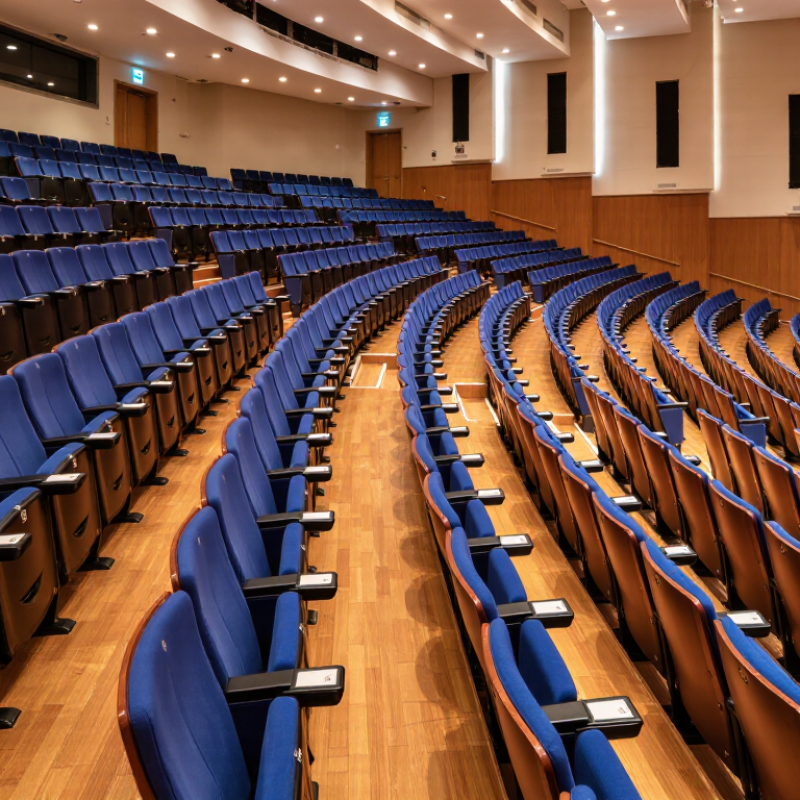
Auditorium chairs in China come in several practical types. Fixed chairs suit cinemas, lecture halls, and conference rooms with permanent seating layouts. Retractable or telescopic chairs work well when one hall serves different events. They can create open floor space quickly. Tip-up seats improve aisle clearance and reduce accidental contact during busy periods. Upholstered models offer better comfort for long performances, while molded seats are easier to clean and maintain.
Some chairs include foldable writing tablets, armrests, cup holders, or numbered seat plates. Acoustic designs may use sound-absorbing upholstery to reduce noise between rows. When inspecting samples, I check the hinge movement, frame stability, foam recovery, and fabric stitching. A chair can look impressive under showroom lights but feel narrow after two hours. That is an easy mistake.
Tips: Measure row spacing before ordering. Confirm fire-performance documents and load tests. Ask for replacement parts and installation guidance. Test several seats with different body sizes. Also, compare warranty terms carefully. Low prices can hide weaker hinges or thinner foam. No chair is perfect. The best choice balances comfort, safety, cleaning needs, local climate, and the hall’s actual use.
Key Features to Consider When Choosing Auditorium Chairs
What Are the Best Auditorium Chairs for Sale in China?
Choosing auditorium chairs requires more than comparing prices or attractive upholstery. Start with the room’s dimensions, sightlines, aisle spacing, and seating capacity. A chair that looks comfortable may block movement when installed too closely. Measure everything twice.
Seat width, back support, and cushioning affect audience comfort during long performances. Look for contoured backs, resilient foam, and breathable fabrics. Seat pitch also matters, especially when viewers carry coats or bags. Test the folding mechanism repeatedly. It should move quietly and return smoothly. Armrests need rounded edges and enough clearance for different body types.
Durability becomes critical in schools, theatres, and conference halls. Ask suppliers for load-test records, material specifications, installation drawings, and warranty terms. Fire-performance documentation should match the destination’s applicable requirements. Check the frame, hinges, floor anchors, and replaceable components. Maintenance teams should access damaged parts without removing an entire row. Accessibility also deserves practical attention, including wheelchair spaces and companion seating.
In factory inspections, small construction details often reveal quality. Uneven stitching, loose fasteners, or noisy hinges should not be ignored. One weakness can become expensive later. Request a physical sample before placing a large order in China. Test it with real users, not only showroom staff. Budget pressure can make thinner padding seem reasonable, but it may compress quickly under daily use. A lower price is not always a lower total cost.
What Are the Best Auditorium Chairs for Sale in China?
The best auditorium chairs should balance comfort, safety, long-term durability, acoustic performance, and ease of maintenance. The chart shows a practical procurement weighting for comparing auditorium chair options without relying on company or brand data.
Leading Materials and Manufacturing Standards in China
What Are the Best Auditorium Chairs for Sale in China?
China’s auditorium seating industry combines high-volume production with increasingly controlled quality systems. CSIL’s World Furniture Outlook 2024 estimates that China supplies about 40% of global furniture production. This scale supports competitive pricing, but materials still require careful inspection. A reliable auditorium chair usually combines powder-coated steel, multilayer plywood, and high-resilience polyurethane foam. Steel frames should resist twisting. Plywood panels should show even lamination, without open edges. Foam density matters, but it is not everything.
During factory evaluation, I would check welding points, hinge movement, and seat-return noise. Small details matter. A seat that slams after every event will quickly damage user comfort. Many buyers request foam densities around 35–45 kg/m³, depending on the design and supplier specification. Fabric should also resist abrasion and cleaning chemicals. The 2023 Global Textile Exchange Materials Market Report shows polyester remains one of the world’s most widely used textile fibers, which explains its popularity in commercial seating. However, recycled content must be verified through traceable documentation, not attractive wording.
Manufacturers should test finished seats against applicable Chinese standards, including QB/T 2602 for public theater seating, and consider ISO 7173 durability methods. EN 12727 is also useful for row-seating performance comparisons. I once treated foam density as the main quality signal. That was too narrow. Fasteners, spring alignment, fire documentation, and installation tolerances can matter more after years of use. Ask for batch records, load-test results, and sample approval before ordering. Supplier claims alone are insufficient.
How to Compare Chinese Auditorium Chair Suppliers
Comparing Chinese auditorium chair suppliers requires more than checking catalog prices. In project reviews, I examine seat dimensions, steel structure, foam density, fabric abrasion results, and the tip-up mechanism. Ask for evidence. A reliable supplier should provide test reports, material specifications, production photos, and a clear quality-control process. Sample chairs should match the proposed production model, including stitching, hinges, armrests, and floor fittings.
Factory experience matters, but it should be measurable. Check completed venue references, monthly capacity, equipment, and the team’s response to technical drawings. Request a sample before discussing large quantities. Sit on it repeatedly. Listen for hinge noise and inspect whether the seat returns smoothly. Cheap is rarely simple. A low quotation may exclude installation parts, export packaging, spare components, or inspection costs. Compare the complete landed cost instead of the unit price alone.
Communication can reveal operational reliability. Send identical specifications to several suppliers and compare their questions, drawings, lead-time assumptions, and warranty terms. Strong suppliers identify risks, such as uneven floors, restricted aisle widths, or local fire-performance requirements. Confirm payment stages, packing details, replacement procedures, and production tolerances in writing. I once overlooked carton protection and received scratched armrests; the mistake delayed installation. That experience made pre-shipment inspection essential. Still, documents are not enough. Visit the factory when possible, or hire an independent inspector to verify quantities, dimensions, upholstery, and function before shipment.


