| Small retail packages | 25 × 15 mm to 40 × 25 mm | Compact linear barcode or small 2D barcode | At least 300 dpi; sharp edges and strong contrast | Coated paper for dry indoor conditions | Short to medium term; protect from frequent rubbing | Confirm that the quiet zones around the barcode remain clear. |
| Standard retail products | 50 × 25 mm to 70 × 40 mm | Common retail linear barcode or 2D barcode | 300 dpi is normally sufficient for reliable scanning | Coated paper or white polypropylene | Medium term; suitable for normal handling | Leave enough space for the barcode, product code, and human-readable text. |
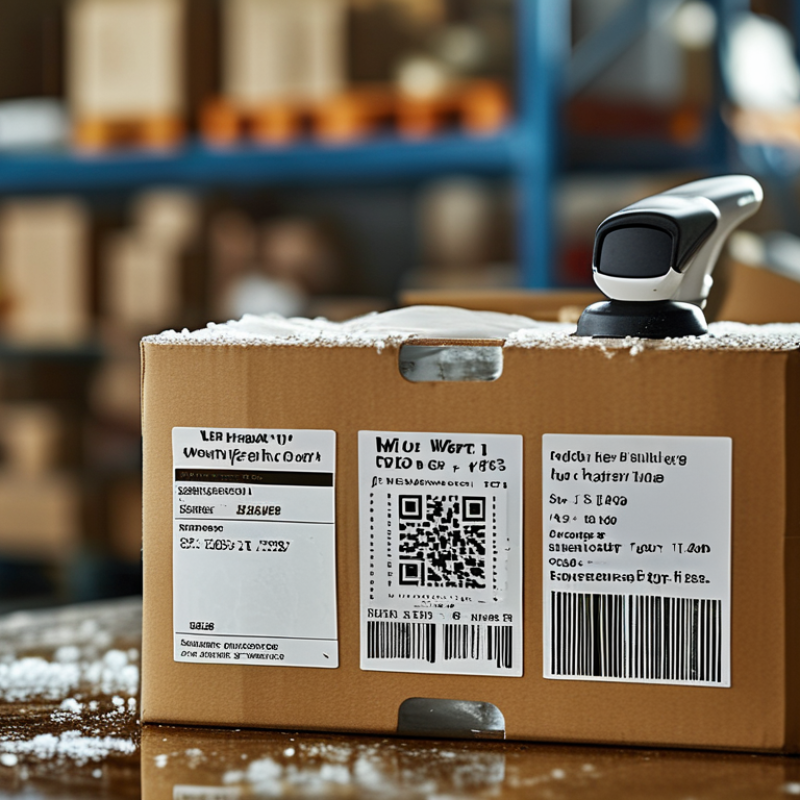
| Shipping cartons | 100 × 75 mm to 150 × 100 mm | Large logistics barcode or 2D barcode | 300 dpi; use large modules and high contrast | High-quality thermal-transfer paper or synthetic stock | Medium to long term; resistant to handling and transport | Place the label on a flat surface away from carton seams and edges. |
| Warehouse inventory bins | 50 × 30 mm to 100 × 50 mm | Linear barcode or 2D barcode | 300 dpi; 203 dpi may work for larger labels | Polypropylene or polyester for demanding environments | Long term; resistant to abrasion and dust | Use a matte surface when overhead lighting may cause glare. |
| Cold-chain products | 40 × 25 mm to 100 × 50 mm | Linear barcode or 2D barcode designed for compact spaces | 300 dpi or higher; verify scans after condensation exposure | Synthetic label material with cold-temperature adhesive | Resist moisture, condensation, and temperatures near or below 0°C | Test adhesion on the actual packaging before production. |
| Outdoor equipment and containers | 60 × 40 mm to 120 × 80 mm | Large linear barcode or 2D barcode | 300 dpi or higher; use dark ink on a light background | Polyester or other UV-resistant synthetic material | Resist sunlight, rain, abrasion, and temperature changes | A protective laminate can extend service life in harsh outdoor conditions. |
| Healthcare and laboratory items | 25 × 15 mm to 50 × 30 mm | Small 2D barcode or compact linear barcode | 300 dpi or higher; inspect every print for defects | High-performance synthetic material | Resist chemicals, moisture, refrigeration, and repeated handling | Use a non-smearing print method and validate readability throughout use. |
| Long-term asset identification | 50 × 30 mm to 100 × 50 mm | Durable 2D barcode or linear barcode | 300 dpi or higher; include human-readable identification | Polyester with permanent adhesive | Multi-year resistance to abrasion, chemicals, and cleaning | Choose a label surface compatible with the asset material and cleaning process. |
| Curved or flexible packaging | 30 × 20 mm to 70 × 40 mm | Compact linear barcode or 2D barcode | 300 dpi; avoid distortion across the barcode area | Flexible film or conformable synthetic material | Medium to long term; resist lifting and wrinkling | Keep the barcode away from tight curves, folds, and flexible seams. |
| Promotional or temporary labels | 40 × 25 mm to 70 × 40 mm | Linear barcode or 2D barcode | 203–300 dpi, depending on barcode size and scanning distance | Coated paper | Short term; suitable for clean, dry indoor use | Prioritize legibility and easy application when the label is not permanent. |
| High-speed automated scanning | 50 × 25 mm or larger | Barcode selected according to the scanning system specification | 300 dpi or higher; consistent darkness and accurate sizing | Low-dust paper or synthetic material with a smooth surface | Medium to long term, depending on the supply chain | Validate the final label with the actual scanner, angle, and conveyor speed. |