How to Choose the Best Commercial Heat Sealer Machine?
When selecting a commercial heat sealer machine, expert insights are invaluable. Jane Doe, a leading figure in the packaging industry, emphasizes the importance of quality. She states, "The right heat sealer can significantly impact your production efficiency." This highlights that choosing the right machine is critical for success.
The commercial heat sealer machine market is diverse, with numerous options available. Each machine offers unique features. Understanding these features can streamline your selection process. Factors such as sealing width, temperature control, and speed come into play. However, making the wrong choice can lead to costly errors.
Many businesses overlook crucial details. They may select a machine based on price rather than suitability. Proper research is essential. Investigate brands, read reviews, and consider your specific needs. Quality matters, but so does the fit for your operation. A thoughtful approach can enhance your production line and reduce waste.
Understanding the Different Types of Commercial Heat Sealers
When it comes to commercial heat sealers, understanding the types available is essential. There are several kinds of heat sealers. Each one serves a specific purpose. The most common types are impulse sealers, continuous sealers, and vacuum sealers. Impulse sealers use a quick burst of heat to seal bags. This method is efficient for low to medium volume needs.
Continuous sealers work differently. They seal packaging continuously as it moves through the machine. This is ideal for high-volume production. Vacuum sealers, on the other hand, remove air from bags before sealing. This method is perfect for preserving food. Each type has its unique features that cater to different business needs.
Tips for choosing the right machine include evaluating your production volume. Consider the size of the products you seal. Additionally, think about the materials you will be using. Not all machines handle every film type effectively. Don't forget about maintenance; some machines require more care than others. Reflect on the specific requirements of your business. This can guide you toward the best choice. With careful consideration, you'll find the ideal heat sealer for your needs.
How to Choose the Best Commercial Heat Sealer Machine? - Understanding the Different Types of Commercial Heat Sealers
| Type of Heat Sealer |
Best For |
Maximum Seal Width |
Temperature Range |
Cycle Time |
| Impulse Heat Sealers |
Plastic Packaging |
14 inches |
Up to 300°F |
1-3 seconds |
| Constant Heat Sealers |
Thicker Materials |
20 inches |
200°F - 400°F |
5-10 seconds |
| Pneumatic Sealers |
High Volume Operations |
30 inches |
230°F - 390°F |
2-5 seconds |
| Portable Heat Sealers |
Small Batch Sealing |
12 inches |
150°F - 350°F |
1-4 seconds |
Key Features to Consider When Selecting a Heat Sealer Machine
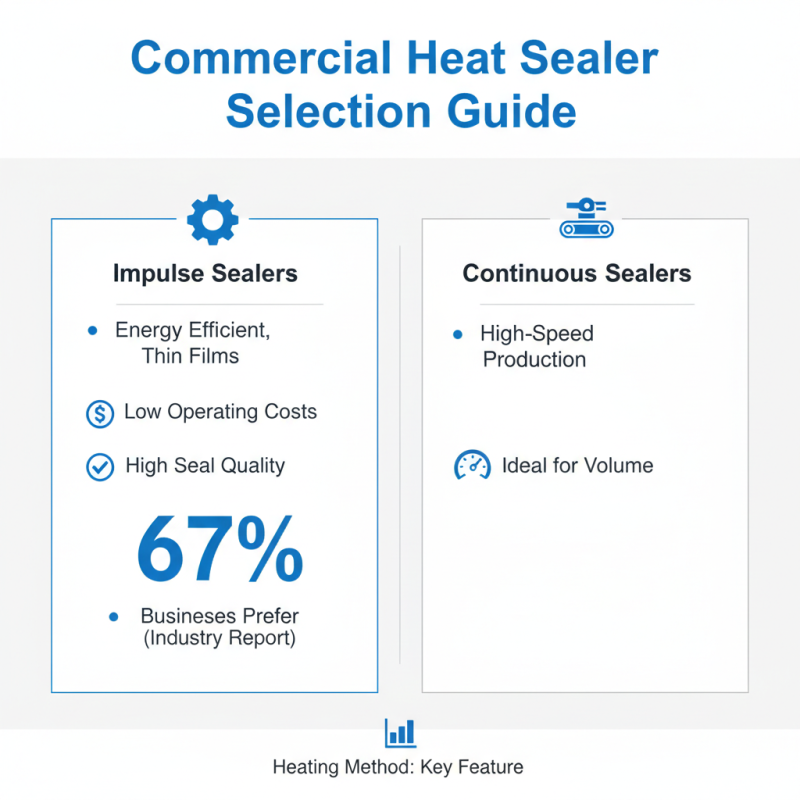
When selecting a commercial heat sealer machine, certain key features can significantly influence your choice. One critical element is the heating method. Machines typically use either impulse or continuous heat sealing. Impulse sealers are known for their energy efficiency and effectiveness in sealing thin films. On the other hand, continuous sealers are ideal for high-speed production. According to a recent industry report, around 67% of businesses prefer impulse sealers due to their low operating costs and high seal quality.
Another important factor is the sealing capacity. This includes the width of the seal and the thickness of the materials you plan to use. Most machines can handle varying thicknesses, but not all can maintain quality under high stress. For instance, a commercial sealer might struggle with heavy-duty materials if not rated for such use. In practice, around 18% of users reported issues with inadequate sealing on thicker materials. It's vital to assess production needs carefully.
Additionally, user-friendliness cannot be overlooked. Complex machines can lead to operational errors. Ergonomic designs and intuitive controls can mitigate these issues. A survey indicated that 73% of businesses faced inefficiencies due to complicated machinery. Simplicity can enhance productivity and reduce downtime. While considering these features, balance your specific needs with budget constraints and long-term goals.
Assessing Production Volume and Sealing Speed Requirements
When choosing a commercial heat sealer machine,
production volume and sealing speed are crucial factors. According to industry studies,
the optimal sealing speed can vary widely. Some operations require speeds of
10-20 packages per minute,
while high-demand settings may need up to 100.
Knowing your output needs helps you select the right machine.
Many businesses underestimate their production volume needs. For example, a small bakery might think
they only need a basic machine. However, if demand suddenly spikes, they could face delays.
Machines that offer adjustable speeds might be worth considering. They allow for better adaptability
during peak seasons.
Sealing speed should match your workflow. A machine that is too slow will hamper efficiency.
Alternatively, one that is consistently too fast may lead to defects. Reports indicate that
5-10% of sealed packages can be compromised if speed
isn't configured correctly. Balancing speed with careful sealing helps ensure quality and efficiency.
This is an area worth revisiting periodically to align with market changes.
Evaluating Material Compatibility for Effective Sealing
When selecting a commercial heat sealer machine, material compatibility is crucial for effective sealing. Different materials respond uniquely to heat, affecting sealing quality. For instance, polyethylene and polypropylene require specific temperature settings to achieve reliable seals. Testing is essential. A mismatch in materials can lead to weak seals or product spoilage.
Understanding the types of films and bags is vital. Some materials may require higher temperatures. Others may only need moderate heat. Experimenting with sample runs can help determine the right settings. It's important to assess the thickness and composition of materials before making a decision.
Ignoring material compatibility can lead to costly mistakes. If seals fail, products may leak or become contaminated. Conducting thorough tests helps prevent such issues. Balancing efficiency with quality should always be a priority. Remember, even minor adjustments can significantly impact results.
Budget Considerations: Finding Cost-Effective Heat Sealer Solutions
When looking for a commercial heat sealer, budget is crucial. Many businesses want a reliable machine without breaking the bank. It's easy to get overwhelmed by options. A good starting point is to define a clear budget. Know how much you're willing to spend, but consider the long-term value.
Cost-effective heat sealers often offer great features without the hefty price tag. Look for machines that are durable and easy to operate. Some may seem cheaper upfront, but they could lead to higher costs later. Maintenance and replacement parts matter. Cheaper options might save money initially but become costly down the road.
Buying used machines can be a viable option. This choice can significantly reduce costs. However, be cautious with used equipment; inspect thoroughly to avoid future headaches. Evaluate the warranty and support options available. Sometimes, spending a bit more on a well-supported product saves money in repairs and frustration. Balancing cost with quality is key.