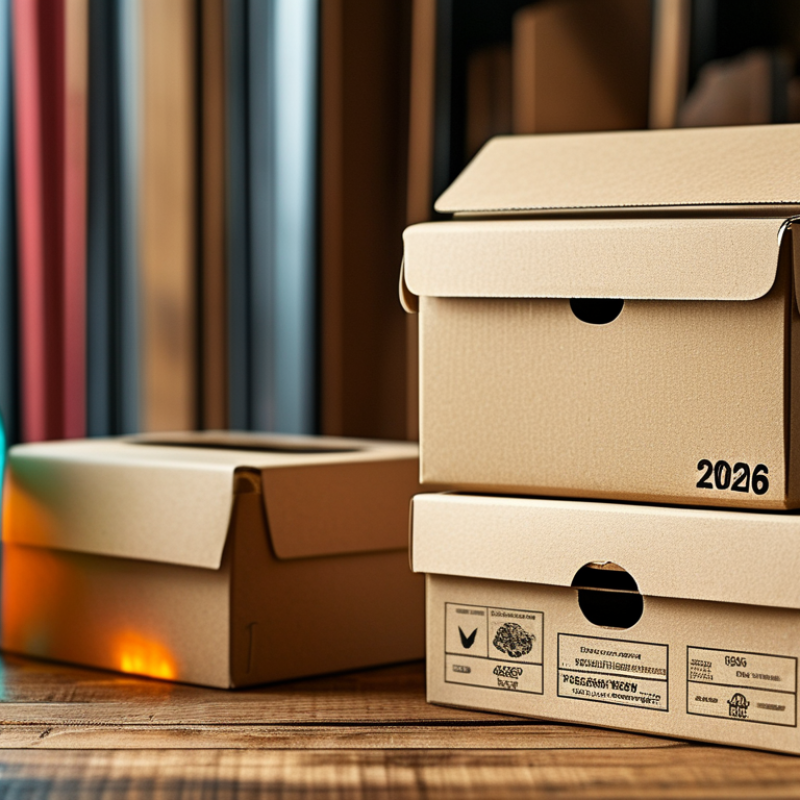
Choosing Custom Packaging Boxes in 2026 requires more than attractive colors and a memorable logo. Packaging now influences product protection, shipping efficiency, customer trust, and environmental expectations. A box may look impressive on a screen, yet fail when stacked in a warm delivery truck. Practical decisions matter.
Start by examining the product’s weight, dimensions, fragility, and handling conditions. A glass bottle needs different protection from a lightweight clothing item. Measure the product carefully, including closures, inserts, and protective wrapping. Excess space increases movement and shipping volume. Too little space creates pressure points. Neither option is ideal.
Material selection also deserves careful attention. Recycled paperboard, corrugated fiberboard, and responsibly sourced virgin fibers can serve different purposes. Ask suppliers for material specifications, strength data, printing limitations, and realistic production samples. Certifications may support responsible sourcing, but they should be verified rather than assumed. Reliable suppliers explain testing methods clearly. They also disclose minimum order quantities, lead times, and quality-control procedures.
Design should balance appearance with performance. A magnetic closure can feel premium, but it may increase cost and material use. A simple tuck box may be easier to recycle and faster to assemble. Small details matter. Consider barcode placement, opening comfort, stacking stability, and warehouse storage. Customer feedback can reveal problems that a design team misses.
No checklist is flawless. Some decisions will need revision after prototype testing. In 2026, the strongest packaging choices will combine evidence, practical experience, and honest evaluation. The goal is not merely a beautiful box. It is dependable packaging that protects the product and earns confidence from every side.
Custom packaging boxes are containers designed around a product’s dimensions, weight, shape, and presentation needs. Unlike standard cartons, they can use tailored structures, printed surfaces, inserts, closures, and protective materials.
In packaging trials, a close-fitting box reduced product movement and lowered the need for extra filler. Small details mattered. A loose corner still caused damage.
In 2026, businesses choose custom boxes for practical and commercial reasons. Accurate sizing can improve storage efficiency and reduce unnecessary shipping volume. Clear labeling can support handling, traceability, and customer understanding. A well-designed opening experience may also strengthen perceived value without adding extravagant materials.
However, appearance should not replace performance. A beautiful box that collapses in humid conditions is a poor investment.
Material selection deserves careful testing. Recycled fiber, water-based coatings, and plastic-free inserts can support lower-impact decisions, but local recycling access varies. Ask suppliers for material specifications, strength data, print safety information, and realistic production tolerances.
Check whether the box protects the product during stacking, vibration, and temperature changes. Request a physical sample before ordering at scale.
I once approved a digital mock-up too quickly, and the finished lid fit badly. That mistake was avoidable. Custom packaging works best when protection, logistics, compliance, and customer experience guide every design choice.