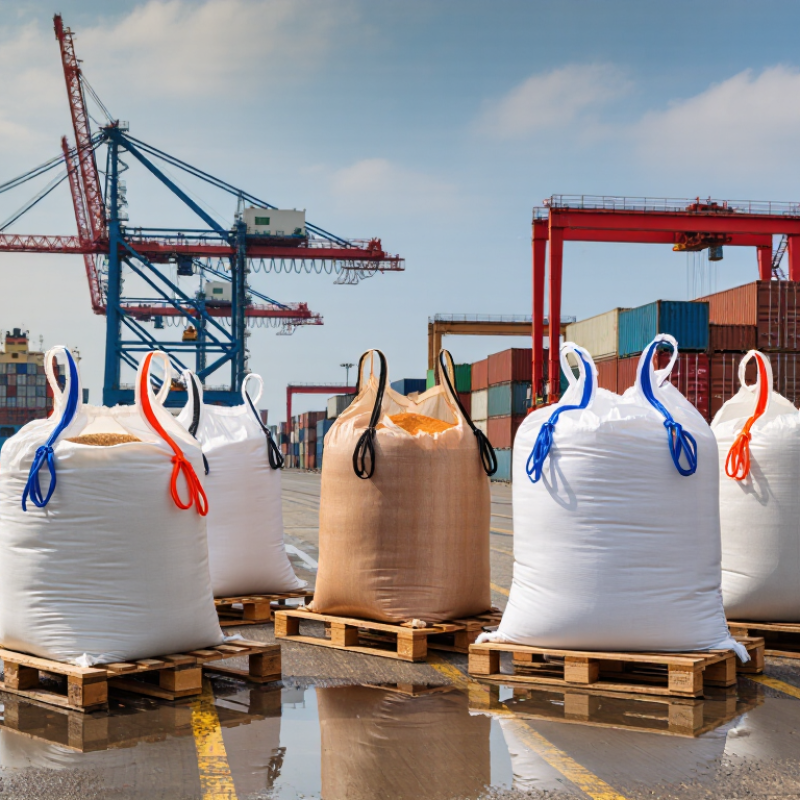
| Bag Construction | Woven polypropylene body with a design intended to allow controlled air exchange; use coated or laminated fabric only where moisture protection is required. | Request fabric construction details, technical drawings, and a production sample. Confirm whether the coating covers the full body, seams, or only selected panels. | Permeable fabric can reduce condensation risk, while excessive permeability may expose moisture-sensitive cargo to the external environment. |
| Safe Working Load (SWL) | Select an SWL that exceeds the filled product weight. Common commercial capacities include approximately 500 kg, 1,000 kg, 1,250 kg, and 1,500 kg. | Check the permanent label, test certificate, and purchase specification. The marked SWL must match the agreed bag design and lifting configuration. | Correct SWL selection helps prevent handling failures during filling, container loading, port transfers, and unloading. |
| Safety Factor | A 5:1 safety factor is commonly specified for single-trip bulk bags; reusable designs may require a different factor and documented test program. | Request a test report showing the relationship between SWL and minimum break strength. Confirm the test method and lifting-loop configuration. | The safety factor provides a defined margin for normal lifting loads, but it does not replace correct storage, handling, or load distribution. |
| Permeability and Airflow | Specify the required air permeability according to the cargo. Use higher airflow for products needing ventilation and lower airflow for products requiring greater containment. | Ask for a measured air-permeability value, test standard, test pressure, and fabric sample. Compare the sample with the approved reference. | Airflow affects condensation, cooling, dust retention, filling speed, and the condition of cargo during long ocean voyages. |
| Fabric Weight and Strength | A typical woven polypropylene fabric range is approximately 120–220 g/m², depending on SWL, product density, bag dimensions, and required durability. | Verify fabric weight, tensile strength, elongation, and seam strength through batch records or independent laboratory testing. | Adequate fabric strength reduces the risk of tearing during stacking, forklift movement, container vibration, and discharge. |
| Dimensions and Filling Ratio | Common dimensions are approximately 85–95 cm wide, 85–95 cm long, and 90–120 cm high; final sizing should be based on product bulk density and container utilization. | Fill a pre-production sample with the actual material and confirm height, stability, outlet fit, and clearance from container walls and doors. | Correct dimensions improve container loading efficiency and reduce shifting, leaning, and damage during transit. |
| Lifting Loops | Choose four corner loops, cross-corner loops, or sleeve systems according to the available lifting equipment. Loop length and spacing must match the handling method. | Inspect loop stitching and anchoring. Conduct a filled-bag lifting test using the intended forklift hooks or lifting frame. | Compatible loops support safe handling and reduce uneven loading forces during warehouse and port operations. |
| Seams and Discharge Outlet | Specify stitched or sift-proof seams and select a discharge outlet size suitable for the product flow characteristics and unloading equipment. | Check seam uniformity, thread security, outlet closure, and leakage using the actual product or a suitable test medium. | Secure seams help control dust and product loss, while a compatible outlet reduces unloading delays and blockages. |
| Moisture and UV Protection | Use an inner liner, laminated fabric, or moisture barrier when the cargo is hygroscopic or when exposure to rain and marine humidity is possible. Specify UV protection for outdoor storage. | Review moisture-barrier details, liner fit, UV-resistance documentation, and storage instructions. Do not treat a permeable bag as waterproof. | Ocean transport can involve high humidity and temperature changes; protection must be matched to the cargo’s sensitivity. |
| Cleanliness and Product Compatibility | For food, pharmaceutical, or sensitive materials, define virgin-material requirements, cleanliness level, liner type, and prohibited substances. | Request a cleaning declaration, raw-material statement, migration or compliance documents where applicable, and inspect samples for odor, stains, fibers, and foreign matter. | Clean and compatible packaging helps prevent contamination, rejected cargo, and costly rework at destination. |
| Quality Control and Traceability | Require documented inspection of fabric, dimensions, seams, lifting loops, SWL marking, and packing condition for each production batch. | Confirm batch numbers, inspection records, retained samples, corrective-action procedures, and a clear process for handling nonconforming goods. | Traceability makes it easier to identify affected shipments and resolve quality issues before they become large-scale claims. |
| Pre-Production Approval | Approve one written specification covering dimensions, SWL, safety factor, permeability, fabric, loops, seams, outlets, labeling, and packaging. | Order a representative sample or pilot batch, perform filled-bag handling and transport-simulation checks, and sign off the final reference sample. | A documented approval process reduces specification drift between sampling and mass production. |