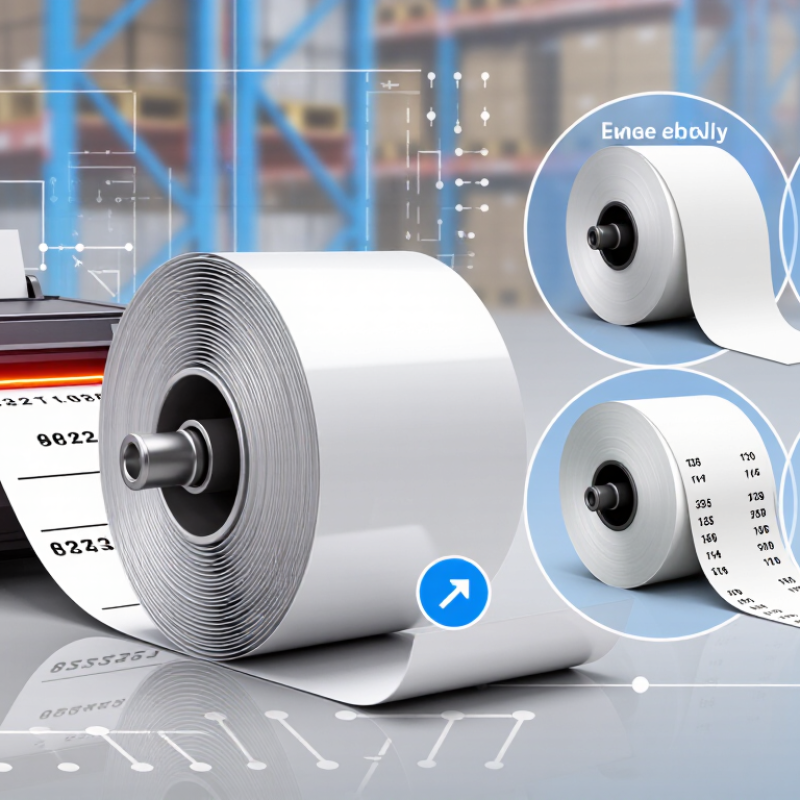
| What it is | Heat-sensitive paper or label stock with a coating that darkens when heated. | A printable surface plus a coated ribbon that transfers ink-like material onto the surface. | Both methods use a heated printhead, but only thermal transfer requires a ribbon. |
| How text and images form | Selected printhead elements heat the coated surface. The coating’s color-forming chemicals react, creating dark marks that form text, barcodes, and graphics. | Selected printhead elements heat the ribbon. Its coating melts or transfers onto the label or other media in the required pattern. | In both methods, the printer creates an image by controlling heat in precise positions as the media moves past the printhead. |
| Consumables | Thermal media; no ink or ribbon is needed. | Compatible media and a thermal-transfer ribbon. | Direct thermal has fewer consumables. Transfer printing adds ribbon selection and replacement to the workflow. |
| Common media | Coated paper rolls and labels designed for direct thermal printing. | Paper, synthetic films, and other compatible label materials; the ribbon must suit the media and printer. | Check the printer’s supported media and ribbon specifications before choosing stock. |
| Image durability | Images can fade or darken with exposure to heat, sunlight, friction, oils, or certain chemicals. Performance varies by media and storage conditions. | Often suitable for more demanding durability needs, depending on the media, ribbon, and operating environment. | For long-term or harsh-environment identification, test the complete printed label under the actual conditions of use. |
| Typical uses | Receipts, queue tickets, shipping labels with short-to-medium service life, and other applications where fast, ribbon-free printing is useful. | Product and asset labels, outdoor or industrial labels, and applications where resistance or longer image life is important. | Choose based on required readability life, exposure, media type, print volume, and total operating cost. |
| Main advantages | Simple operation, fewer consumables, and no ribbon to install or manage. | Can support a wider range of media and durability requirements when paired with an appropriate ribbon. | Direct thermal favors simplicity; thermal transfer favors versatility and demanding label applications. |
| Main limitations | Not ideal when the image must remain stable through prolonged heat, light, abrasion, or chemical exposure. | Requires ribbon management, compatible supplies, and appropriate setup; operating costs include both ribbon and media. | Neither method is universally best. Confirm print quality, environmental resistance, and total cost with representative samples. |
| Best choice in 2026 | Best when convenience and quick printing matter more than extended image life, such as many receipts and short-lived labels. | Best when labels need a longer-lasting image or must withstand challenging conditions, provided the selected media and ribbon are compatible. | For most short-life paper printing, consider direct thermal. For durable identification, consider thermal transfer and validate the complete label system. |