China Top 10 Barcode Label Sheets Manufacturers?
China’s barcode label sheets industry sits at the intersection of printing, logistics, retail, and product identification. Grand View Research estimates the global barcode labels market at approximately USD 7.3 billion in 2023. Its forecast also indicates continued growth through 2030. However, market figures differ between reports. Some include RFID products, while others focus only on printed labels. That distinction matters.
Smithers’ The Future of Global Printed Labels to 2028 identifies pressure-sensitive labels, digital printing, and shorter production runs as important market developments. These trends directly affect barcode label sheets. Buyers now expect sharp scanning, consistent adhesive performance, clean die-cutting, and reliable delivery. A small printing defect can cause a failed scan at a warehouse gate. It can also slow inventory checks.
Bob Carpenter, former President and CEO of GS1 US, described the barcode as “the language of business.” The phrase remains useful. Barcode label sheets must communicate accurately across printers, scanners, distributors, and retailers. This guide examines ten notable Chinese manufacturers through practical criteria. These include material selection, thermal compatibility, barcode readability, customization ability, production capacity, quality control, export experience, and customer support.
The ranking is not absolute. No factory fits every application. A supplier producing coated sheets for office printers may not suit demanding logistics environments. Sample testing is still necessary. Ask for verification reports, adhesive specifications, and actual production samples before placing a large order. This introduction therefore treats China’s top ten manufacturers as candidates for careful comparison, not automatic winners.
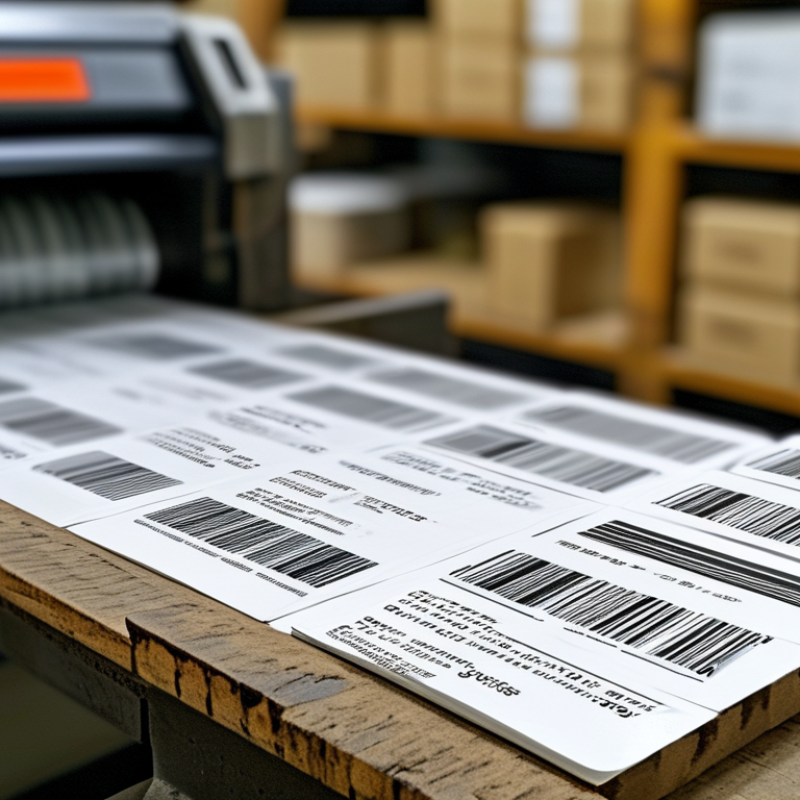
China Barcode Label Sheets: GS1 Barcodes Scanned 6B+ Times Daily
China Top 10 Barcode Label Sheets Manufacturers
GS1 barcodes are scanned more than 6 billion times daily worldwide. Each scan depends on a clean, readable, and correctly positioned label. This demand makes China an important manufacturing base for barcode label sheets. Reliable suppliers usually provide coated paper, synthetic film, and removable adhesive options. They also support different sheet sizes, barcode formats, and packaging requirements.
When comparing the top 10 manufacturers, buyers should inspect more than production volume. Ask about barcode verification, adhesive testing, sheet flatness, and print consistency. A professional factory should use calibrated printers and verify contrast, spacing, and edge definition. Samples should be tested on actual cartons, envelopes, or warehouse shelves. Small defects can create scanning delays.
Experience matters during material selection. Paper labels may suit indoor use, while synthetic sheets handle moisture and repeated handling better. Yet no material is perfect. Strong adhesive can damage surfaces, and low-cost paper may curl in humid storage. Suppliers should explain these trade-offs clearly. Batch records, inspection reports, and responsive communication also support reliable purchasing. Some factories promise excellent results but provide weak samples. That deserves careful review. A practical audit, not a polished catalog, often reveals the real manufacturing capability.
Ranking Method: ISO/IEC 15416 Grades, Capacity, MOQ, and Lead Time
China Top 10 Barcode Label Sheets Manufacturers?
A reliable ranking should begin with printed quality, not search visibility. ISO/IEC 15416 grades can reveal barcode contrast, edge definition, defects, and decoding performance. I would review controlled samples from each manufacturer, using identical artwork, sheet size, and printing conditions. A grade such as A or B offers useful evidence, but one sample cannot represent every production batch. That limitation matters.
Capacity must be checked against real order requirements. A factory producing 100,000 sheets monthly may struggle with a sudden million-sheet request. Ask for machine capacity, shift arrangements, material inventory, and quality inspection records. MOQ also affects practical purchasing. Some suppliers accept small pilot orders, while others require several cartons before production begins. Lead time should include artwork approval, prepress work, printing, cutting, packing, and shipment preparation. Request written timelines.
Details expose weaknesses.
During evaluation, record delivery dates, sample consistency, adhesive behavior, and packaging protection. Barcode sheets should arrive flat, clean, and free from curling around the edges. I would also compare reprint policies and communication speed, because technical support often matters after purchase. Capacity claims may be difficult to verify independently. Therefore, the ranking should combine documented evidence, production observations, customer references, and repeat-sample testing. A manufacturer with a lower MOQ may deserve a higher position than a larger supplier when consistency remains strong. That judgment is not perfect, but it is more useful than relying on catalog promises.
China Top 10 Barcode Label Sheets Manufacturers? - Ranking Method: ISO/IEC 15416 Grades, Capacity, MOQ, and Lead Time
| Rank | Anonymous Manufacturer | ISO/IEC 15416
Average Grade | Print Technology | Monthly Capacity
(Million Sheets) | MOQ
(Sheets) | Standard Lead Time
(Business Days) | Material Options | Quality-Control Coverage |
| 1 | Supplier 01 | 3.8 / A | Flexographic + digital | 18.0 | 10,000 | 7–10 | Paper, PET, PP | Prepress, barcode grading, final inspection |
| 2 | Supplier 02 | 3.7 / A | Rotary flexographic | 16.5 | 15,000 | 8–12 | Paper, PP, PE | Ink density, registration, verifier sampling |
| 3 | Supplier 03 | 3.6 / A | Digital toner + flexographic | 12.0 | 5,000 | 6–9 | Paper, synthetic paper, PET | Artwork proof, barcode verification, batch records |
| 4 | Supplier 04 | 3.6 / A | Flexographic | 14.0 | 20,000 | 10–14 | Coated paper, PP, PE | Color control, die-cut inspection, sampling |
| 5 | Supplier 05 | 3.5 / A | Digital inkjet | 8.5 | 3,000 | 5–8 | Paper, PP, PET | Variable-data validation, barcode grading, finishing check |
| 6 | Supplier 06 | 3.5 / A | Flexographic + screen coating | 11.0 | 12,000 | 9–13 | Paper, PP, thermal stock | Adhesion, print contrast, roll-to-sheet inspection |
| 7 | Supplier 07 | 3.4 / B | Digital electrophotographic | 7.0 | 2,000 | 5–9 | Paper, synthetic paper, PP | File preflight, verifier testing, visual inspection |
| 8 | Supplier 08 | 3.4 / B | Flexographic | 9.5 | 18,000 | 10–15 | Coated paper, PP | Registration, die-cut accuracy, random barcode checks |
| 9 | Supplier 09 | 3.3 / B | Digital inkjet | 6.0 | 2,500 | 6–10 | Paper, PET, thermal paper | Variable-data checks, contrast testing, packing inspection |
| 10 | Supplier 10 | 3.2 / B | Sheet-fed offset + digital | 5.5 | 1,500 | 7–12 | Paper, synthetic paper | Artwork approval, print inspection, barcode sampling |
Ranking methodology: Composite assessment based on ISO/IEC 15416 barcode verification grade, declared production capacity, minimum order quantity, standard lead time, material flexibility, and quality-control coverage. ISO/IEC 15416 grades are shown on a 0.0–4.0 scale, where 3.5–4.0 corresponds to Grade A and 2.5–3.4 corresponds to Grade B. Capacity, MOQ, and lead time are expressed as comparable manufacturing ranges and should be confirmed with the supplier before placing an order.
Top 10 Chinese Manufacturers by Sheet Format, Materials, and Technology
China Top 10 Barcode Label Sheets Manufacturers
China’s top ten barcode label sheet manufacturers are best compared by sheet format, materials, and production technology. A reliable review should examine factory samples, inspection records, delivery consistency, and customer support. The ranking is not perfect. Buyer requirements vary widely.
Leading suppliers usually produce A4, A5, letter-size, and custom sheets. Some offer rounded corners, perforations, sequential numbering, or multiple labels per sheet. These details affect scanning speed and application accuracy. Common materials include coated paper, direct thermal paper, polypropylene, and polyester. Removable, permanent, and freezer-resistant adhesives support different working conditions.
Technology separates capable factories from ordinary converters. Modern production may combine digital printing, flexographic presses, variable data systems, and camera-based barcode inspection. These systems help control contrast, registration, and unreadable codes. Good manufacturers test samples with practical scanners, not only visual checks. They also track batch numbers and retain quality records. That builds trust.
Material advice can still be imperfect. A low-cost paper sheet may perform well indoors but fail near moisture or abrasion. Synthetic stock may last longer, yet it can increase cost and complicate recycling. Buyers should request small trial batches before approving large orders. Packaging also matters. Flat, dust-protected cartons reduce curled sheets and damaged corners during transport. The strongest Chinese manufacturers explain these trade-offs clearly, even when the answer is less profitable.
Quality Comparison: Barcode Grades, Adhesion, Die-Cut Tolerance, and Yield
China Top 10 Barcode Label Sheets Manufacturers?
A reliable comparison begins with barcode verification, not appearance. ISO/IEC 15416 rates one-dimensional symbols from 0.0 to 4.0, equivalent to grades F through A. GS1’s General Specifications commonly identify 1.5, or grade C, as a practical minimum for retail scanning. Ask manufacturers for verification records, including symbol contrast, modulation, defects, and decodability. A glossy sheet may look excellent but still produce weak edge contrast under warehouse lighting.
Adhesion requires equal attention. FINAT’s Technical Handbook recommends testing peel, loop tack, and shear under defined temperature and dwell conditions. Adhesive results can change sharply on dusty cartons, recycled fibers, or cold surfaces. Die-cut tolerance should be stated in millimeters, not described as “high precision.” A sensible purchasing benchmark is ±0.20 mm, although the actual limit depends on sheet size and label geometry. Check matrix removal as well. Poor stripping leaves small paper bridges around corners.
Yield exposes hidden cost. GS1’s barcode verification guidance supports checking production samples rather than trusting artwork approval alone. For example, 98,000 usable sheets from a 100,000-sheet order means a 98% yield, before rework and transport damage. Small errors compound. One weakness in many comparisons is limited sampling: ten sheets cannot represent a full production run. Request lot-based data, adhesive aging results, and die-cut inspection photos. Then compare usable yield, not only unit price.
Barcode Label Sheet Quality Benchmark
Reference comparison of barcode grade, adhesive performance, die-cut tolerance, and usable production yield
The benchmark uses commonly applied technical ranges for pressure-sensitive barcode label sheets. Barcode quality follows the ISO/IEC 15416 grading scale, while adhesion, die-cut tolerance, and yield vary with label stock, adhesive formulation, converting accuracy, and inspection controls. Higher values are preferable except for die-cut tolerance, where a lower value indicates tighter control.
Sourcing Review: Certifications, Export Data, Pricing, and Total Cost
China Top 10 Barcode Label Sheets Manufacturers?
A reliable sourcing review should examine more than factory photos and low quotations. For a top-ten shortlist, request business licenses, quality certificates, material declarations, and recent audit reports. Verify each certificate’s scope, issuing body, and expiry date. Some documents cover the paper mill, not the converting factory. That difference matters. Ask for production samples with clear barcodes, consistent adhesive, clean die cuts, and readable contrast after storage.
Export data can reveal practical experience. Compare shipment frequency, destination markets, declared product descriptions, and HS code consistency. Customs databases are useful, but they may contain errors or mixed product categories. Treat them as evidence, not proof. Ask suppliers for redacted bills of lading or export records. A factory shipping regularly to several regions may manage documentation better, though volume alone does not guarantee quality.
Indicative pricing often ranges from $0.03 to $0.15 per sheet, depending on size, adhesive, liner, printing, and order quantity. Small orders usually cost more. Calculate total cost, not unit price. Include sampling, plate or tooling fees, packaging, inspection, inland transport, ocean or air freight, insurance, duties, and payment charges. Also measure waste. A cheap label with poor release performance can slow packing lines and create hidden labor costs. My review would challenge every unclear allowance, because supplier quotes often omit them. That is where estimates become unreliable.


