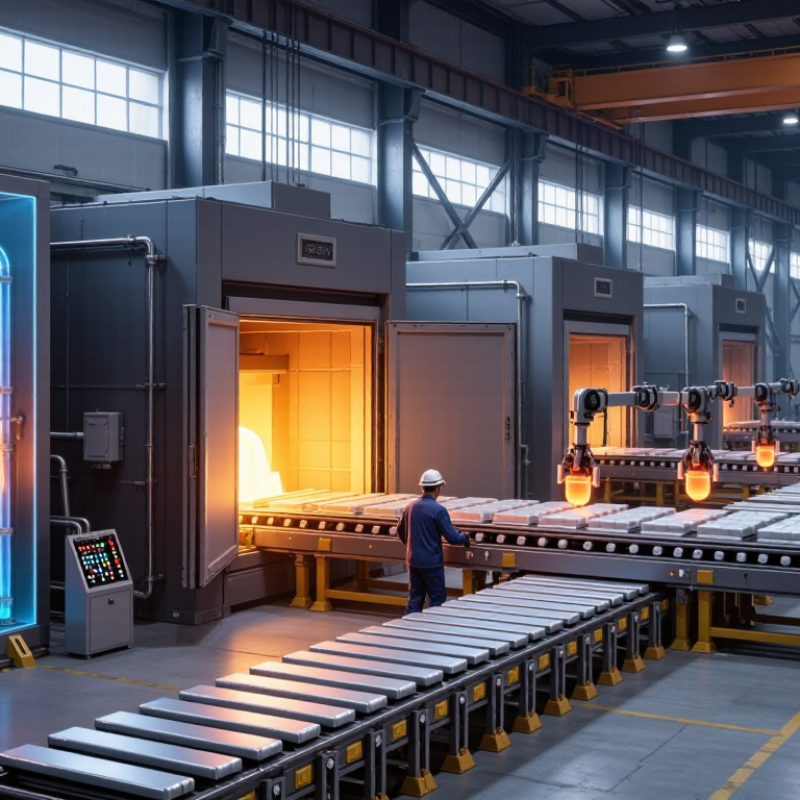
Choosing among China’s top aluminum furnace suppliers requires more than comparing quoted prices. Global buyers should match furnace type, alloy range, batch size, and local power conditions. A die-casting plant may need stable holding temperatures, while a recycling facility needs strong dross control and rapid melting. Ask for measured fuel or electricity consumption, not general efficiency claims.
The International Aluminium Institute reports that recycled aluminum can require up to 95% less energy than primary production. This makes furnace efficiency especially important for secondary-metal processors. Request factory acceptance tests using your actual alloy, charge weight, and target temperature. Check thermal uniformity at several points, cycle time, emissions controls, and refractory service life. The International Energy Agency also identifies energy efficiency and electrification as major decarbonization routes for heavy industry. Supplier data should reflect those priorities.
Experience is visible in details. Can the supplier provide test records, installation drawings, spare-parts lists, and operator training? Confirm response times, remote diagnostics, and technician availability in your region. Review references from plants with similar capacities, not merely impressive project counts. Warranty language deserves careful reading. A low initial price can hide expensive downtime, weak insulation, or unavailable components. I would also request a total-cost model covering energy, maintenance, consumables, and five years of production. My own caution: laboratory performance may not survive dusty, variable shop-floor conditions. Verify it in writing.