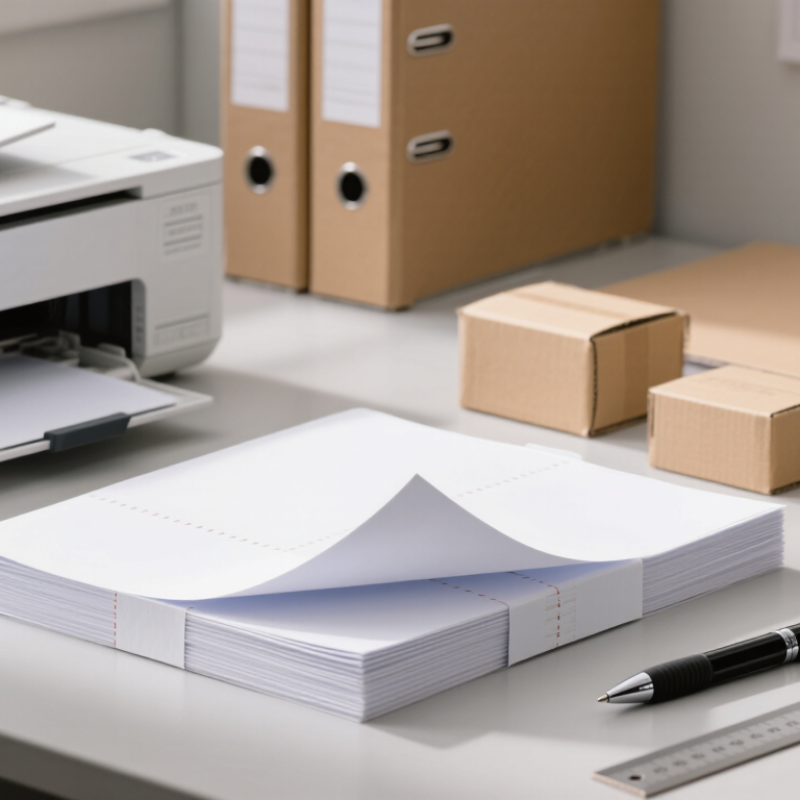
| Sheet format | A4 sheets measure 210 × 297 mm. Sheets may have different label counts, shapes, and layouts. | Businesses printing labels in batches on standard office equipment. | Label dimensions, number of labels per sheet, margins, and spacing between labels. | Match the sheet layout to your label size and printing template; do not assume all A4 label sheets share the same layout. |
| Printer compatibility | Label paper is commonly specified for inkjet printers, laser printers, or a particular printer type. | Office labels, product information, addresses, and inventory identification. | The label paper’s stated printer compatibility and your printer’s supported paper size and media settings. | Use stock designed for your printer. Incorrect media can lead to poor print quality, adhesive problems, or paper jams. |
| Face material | Common choices include paper with a matte or coated surface. | Matte paper suits clear, easy-to-read text; coated paper can suit designs requiring a smoother printed finish. | Printer compatibility, surface finish, intended use, and whether the printed label needs additional protection. | For labels exposed to moisture, abrasion, or frequent handling, check whether paper is suitable or a more durable label material is needed. |
| Adhesive type | Permanent and removable adhesives are common options. | Permanent: shipping, packaging, and product labels. Removable: temporary signs, storage labels, and short-term identification. | Surface type, application temperature, expected use period, and removal requirements. | Adhesion and clean removal depend on the adhesive, surface, and conditions. Test on the intended surface before large-scale use. |
| Label shape and size | Rectangular, square, and round labels are available in various dimensions. | Rectangular labels for addresses and product details; round or square labels for seals and compact identifiers. | Available print area, corner shape, label spacing, and compatibility with your design or mailing software. | Leave enough clear space around text and barcodes so that content is not clipped by the label edges. |
| Print content | Text, logos, product details, addresses, and barcodes can be printed when supported by the printer and label stock. | Order fulfilment, product identification, filing, and stock control. | Print resolution, contrast, label dimensions, and the scanning requirements of any barcode system. | Print a test sheet and verify that text is legible and barcodes scan correctly before printing a full batch. |
| Application environment | Standard paper labels are intended for general indoor applications unless specified otherwise. | Folders, cartons, envelopes, and products kept in suitable indoor conditions. | Exposure to water, heat, sunlight, friction, oils, or other environmental conditions. | For demanding environments, check the material and adhesive specifications; ordinary paper labels may not withstand moisture or abrasion. |
| Order quantity and waste | Pack sizes and label layouts vary by supplier and product. | Businesses balancing regular print runs with storage and purchasing needs. | Sheets per pack, labels per sheet, expected usage, and whether partially used sheets can be fed reliably through your printer. | Choose a layout and pack quantity that suit your actual demand, and follow the manufacturer’s guidance for reusing partially printed sheets. |