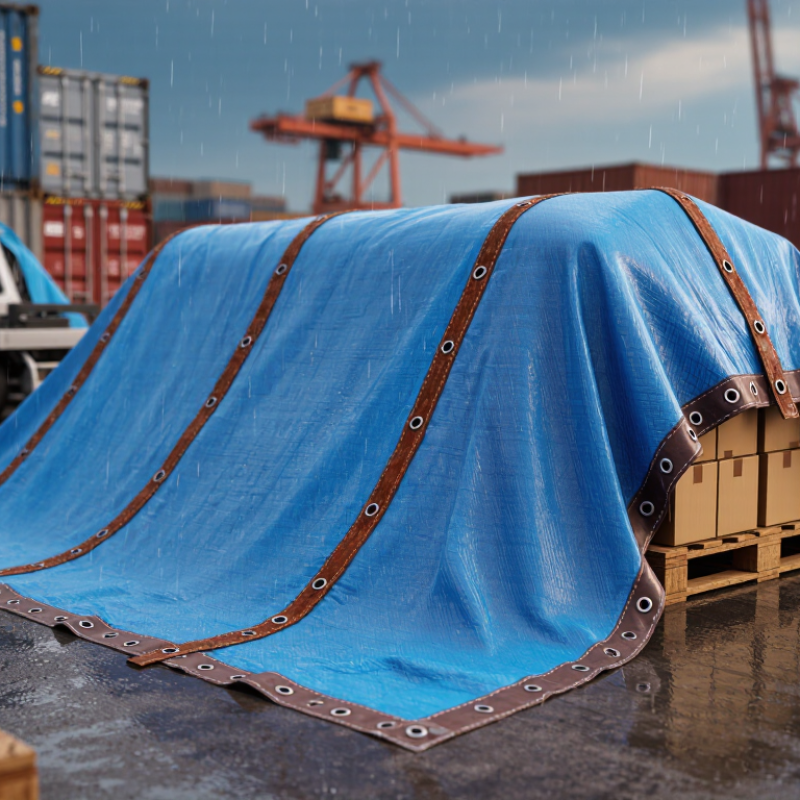
| Sizes and formats | Examples of commonly requested sheet sizes include 2 × 3 m, 3 × 4 m, and 4 × 6 m. PE tarpaulin is also supplied in rolls, with widths and lengths varying by producer and specification. | Finished dimensions and tolerances; whether measurements are cut size or finished size; roll width; hem construction; eyelet spacing; and whether custom dimensions are available. | Confirm the usable finished size, not just the nominal size. Custom sizes may require a separate production run and can affect minimum order quantity and lead time. |
| Fabric weight (GSM) | Light-duty products are often around 60–90 g/m²; general-purpose options commonly fall around 100–180 g/m²; heavier-duty constructions may be approximately 180–250 g/m² or more. | Whether the quoted GSM covers the finished laminated fabric; weave and coating construction; weight tolerance; and any test method used for measurement. | GSM is a useful comparison, but it does not determine performance on its own. Compare construction, tear strength, UV resistance, seams, and intended use as well. |
| Minimum order quantity (MOQ) | For planning purposes, stock colors and standard sizes may be available in smaller lots, while custom colors, printing, or dimensions can require several hundred to several thousand pieces. Actual MOQs vary widely. | MOQ per size, color, and design; whether mixed sizes can be combined; sample availability; setup charges; and pricing at several order quantities. | Request a written quotation that separates product price, customization costs, packaging, samples, and any applicable export or freight charges. |
| Certifications and testing | Documentation may include a quality-management certificate for the manufacturing site, material test reports, or market-specific compliance declarations. Requirements depend on destination market and end use. | Certificate holder, issuing body, scope, validity, product or site coverage, and test-report sample details. Ask whether REACH or RoHS documentation is relevant to the intended market and product. | Do not assume a factory certificate certifies every tarp. For UV, flame-retardant, or chemical claims, request test reports for the relevant construction and confirm the required standard with the buyer or regulator. |
| Lead times | As an initial planning estimate, stocked products may take about 1–3 weeks to prepare, while customized production may take about 3–8 weeks. These are indicative ranges, not guaranteed delivery times. | Production time versus transit time; sample and artwork approval; peak-season capacity; inspection schedule; port handling; and the shipping term used in the quotation. | Build in time for pre-production samples, testing, inspection, customs clearance, and possible delays. Confirm the dispatch date and estimated arrival separately. |
| Waterproofing and durability | PE tarpaulins commonly use woven polyethylene fabric with a laminated coating. Performance depends on fabric construction, coating, seams, and exposure conditions. | Water-resistance test method, seam and hem details, UV-treatment claim and test evidence, eyelet material, and warranty conditions. | Specify the expected application—such as temporary covering, storage, or outdoor use—and request samples or test evidence for performance-critical orders. |